
Total Cost of Risk (TCoR)
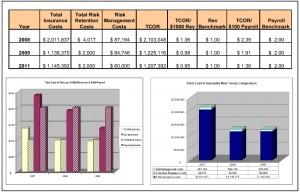
Do you know what your business’ TCoR is? What is it costing your organization each year?
TCoR is the amount of net profit your business is giving up by spending it on risk-related expenses. Imagine if the leadership of your company understood that they could improve the organization’s bottom line by implementing strategies which would reduce its Total Cost of Risk. You can then look at that number as one of the metrics that gets tracked and managed as part of the business’ strategic planning.
“WHAT GETS MEASURED GETS MANAGED!”
We define TCoR as the total cost of your insurance premiums, losses, and, costs for related outside services (attorneys, safety engineers, etc.). TCoR is a quantifiable, controllable number that can be identified and reduced. Companies that implement best risk practices are able to develop strategies to manage each of these costs.
Every dollar saved goes straight to the bottom line. The ALS Group partners with organizations to identify, manage and, ultimately, reduce the costs, herein, increasing their profitability.

Questions to consider:
- Do you use this metric to evaluate how successful your risk management process is?
- Have you benchmarked your TCoR against that of your peers?
- Do you balance retention vs. premiums so that your risk cost is optimized?
- Is this metric something that is included in the performance evaluations of your team or business unit objectives?
Frequently Asked Questions
What is total cost of risk (TCoR)?
Total cost of risk (TCoR) is everything your business spends because of risk in a year: insurance premiums, retained losses such as deductibles and uninsured claims, and the cost of outside services like attorneys and safety engineers. Simply put, it is the real price of risk, not just the insurance bill. Most companies have never added it up.
How do you calculate total cost of risk?
Add three things for the same period: premiums, retained losses (deductibles, self-insured and uninsured claims) and risk administration costs (outside services, claims handling and internal staff time). Many companies then divide the total by revenue so they can compare year to year. The hard part is usually finding the retained losses, because they are spread across many budgets.
Why does TCoR matter more than the premium alone?
The premium is only part of what risk costs you. A lower premium with a higher deductible or narrower coverage can raise your TCoR the first time a claim hits. Tracking TCoR shows whether a decision actually saved money or just moved the cost somewhere else.
How can a business lower its total cost of risk?
The most common levers are tightening contracts so others’ losses stay with them, enforcing vendor insurance requirements, improving safety and claims handling, and setting deductibles and limits to fit the financial strength of the business. Every dollar saved goes straight to the bottom line. What gets measured gets managed.
How does ALS help measure and reduce TCoR?
We calculate your baseline TCoR, find the biggest drivers and build a plan to bring them down, then track the number year over year so leadership can see the results. Because we are paid only by our clients, a recommendation to buy less insurance is as likely as a recommendation to buy more.